
Free Printable Age Calculation Worksheet for Therapists
The Day I Miscalculated a Client’s Age by Two Years
I was sitting across from a new intake, a teenage boy slouched in the chair, arms crossed. His mother filled out the history form while I flipped through the referral packet. We were 40 minutes into a 50-minute session when I glanced down at my notes. My scribbled math in the margin was a mess. I had subtracted the birth year from the current year but forgotten to account for the fact that his birthday wasn’t for another four months.
I spent the last 10 minutes of the session talking about developmental milestones for a 15-year-old when he was technically still 13. The clinical framing was off. The mother noticed. She corrected me politely, but the damage to my credibility was done. I never wanted to look that unprofessional again.
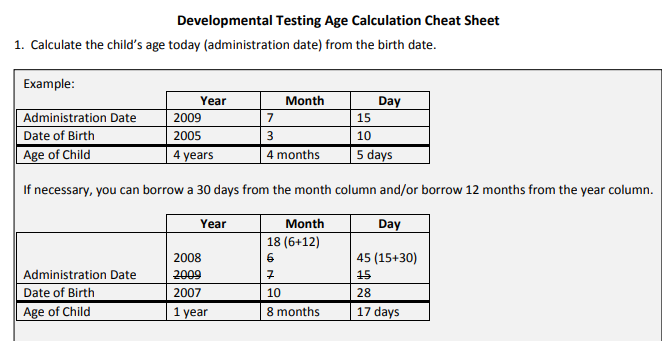
That’s why I created a standardized printable age calculation worksheet for therapists. It sounds simple, but when you’re juggling caseloads of 30+ clients, your brain glitches. You need a paper trail that doesn’t rely on mental math under pressure.
Featured Snippet: What Is an Age Calculation Worksheet?
A printable age calculation worksheet for therapists is a clinical documentation tool that instantly converts a client’s date of birth into precise chronological age (years, months, and days). It eliminates mental math errors, ensures accurate DSM-5 developmental benchmarks, and provides a HIPAA-compliant paper trail for intake assessments, IEP meetings, and treatment planning.
Why Therapists Can’t Rely on Mental Math
Whether you’re a Licensed Professional Counselor (LPC) or a school psychologist, precision matters. In our field, age isn’t just a number. It determines:
- DSM-5 diagnostic criteria: A 5-year-old with tantrums is developmentally expected; a 12-year-old isn’t.
- Eligibility for services: Individuals with Disabilities Education Act (IDEA) timelines are strict and non-negotiable.
- Assessment norms: If you score a psychological assessment with the wrong age norm, the entire evaluation is invalid.
I’ve seen occupational therapists and speech-language pathologists lose reimbursement because the chronological age worksheet in the medical record had a strike-through and a correction initialed. Payers hate that. They want clean documentation.
Who Actually Needs This Form?
This isn’t just for psychiatrists. The client age determination form is vital for a wide range of professionals. I’ve shared variations of my template with:
- Pediatric therapists: Tracking down to the week for developmental delay screenings.
- Neuropsychologists: Calculating precise age for cognitive baseline testing.
- School psychologists: Determining eligibility for special education under strict state timelines.
- Clinical social workers: Completing biopsychosocial intake forms where historical trauma timelines matter.
If you’ve ever found yourself counting on your fingers while a client watches, you need a therapy documentation template for this specific task.
How to Use a Printable Age Calculation Worksheet: A Step-by-Step Guide
When I designed my original age computation practice sheet, I realized the layout matters as much as the math. Here is the exact workflow I use now:
Step 1: Capture the “Test Date” First
Don’t start with the birth date. Start with today’s date. I put the date of examination at the very top. Why? When you look back at this client information worksheet three months later, you won’t remember if you calculated the age on the day of the intake or the day you finished the report. This fixes that ambiguity for insurance audits.
Step 2: Write the Birth Date in ISO Format
On my date of birth calculation sheet, I always write the birth date as YYYY-MM-DD. It’s a small habit that prevents the massive mistake of flipping the month and day. You haven’t felt frustration until you’ve realized you scored an entire Woodcock-Johnson battery based on a May 6th birthday when it was actually June 5th.
Step 3: The “Borrowing” Method
This is where the simple clinical age assessment form saves you. Don’t just subtract the years. Use the proper borrowing formula:
- Days: If the test day is less than the birth day, borrow a month (30 days) from the test month.
- Months: If the test month is less than the birth month, borrow a year (12 months) from the test year.
- Years: Then subtract the years.
I learned this the hard way. I once calculated a toddler’s age as 2 years, -2 months on a scratch paper. That’s a sign of a burnt-out therapist. A structured age calculation worksheet PDF prevents that specific brain fog.
Step 4: Note the Prematurity Adjustment
If you work with early intervention, you know this. Until a child turns 2, you must often adjust for prematurity. My pediatric age calculation tool section has a checkbox: “Born before 37 weeks?” If yes, you subtract the weeks of prematurity from the chronological age. Failing to do this leads to a false positive for developmental delays—a terrifying moment for parents that we can easily avoid.
Choosing the Right Intake Forms (Table Breakdown)
I’ve tested generic forms before realizing therapy-specific ones are non-negotiable. Here is a quick comparison of what I’ve found useful for private practice versus school settings.
| Scenario | Best Tool Fit | Key Feature | Common Mistake |
|---|---|---|---|
| Private Practice Intake | Mental Health Intake Forms (Custom PDF) | Combines age calc with consent and HIPAA notice | Forgetting to bring it to the waiting room |
| School Evaluation | Psychological Assessment Printables | Includes space for grade retention history | Using the school year start date instead of exact test date |
| Early Intervention | Developmental Age Worksheet | Automatic prematurity adjustment box | Failing to update the chronological age as the child ages out of adjustment |
| Screening Days (High Volume) | Therapy Documentation Templates (Short form) | Strictly date-of-birth to age calculation | Illegible handwriting when rushed |
| Supervision/Interns | Age Computation Practice Sheet | Worked example and formula legend on the bottom | Using the school year start date instead of the exact test date |
Digital Tools vs. The Printable Paper Method
I know what you’re thinking. “Just use an app.” There are excellent tools like Therapy Brands’ documentation software or even simple online calculators. But in a HIPAA compliance context, I’m paranoid.
I dropped my phone once during a Mental Status Examination (MSE). The screen shattered. I had no access to my “apps.” Paper doesn’t crash. Paper doesn’t require a BAA with a tech company. A printable age worksheet download sits securely in a locked file cabinet. There’s a reason why Teachers Pay Teachers (TpT) is flooded with requests for these printable counseling worksheets—veteran clinicians prefer analog reliability for quick math.
However, a hybrid method works for Cognitive Behavioral Therapy (CBT) planners. I use a printed therapy session planning form for the math, and then I transfer the verified chronological age into my electronic health record. This double-entry might seem inefficient, but it’s actually a redundancy check that catches errors before a diagnostic report goes to a pediatrician.
Common Mistakes I’ve Seen in Clinical Supervision
When I supervise new LPC candidates, math errors on a client’s biographical data form are the most common “hidden” mistake. Here’s what I flag:
- The February Trap: People forget February does not have 30 days. When borrowing days, you must know how many days were in that specific February (28 or 29). I keep a Leap Year reference on my clinical age assessment form.
- The “Drop the Year” Error: A therapist writes down that the client is a “3rd grader,” assumes an age of 8, and never checks the birth certificate. Turns out the child started kindergarten late. This ruins a neuropsychological assessment where precise norms matter.
- Transposing Numbers: Writing 2004 instead of 2014. This is a dyslexia or fatigue issue. A therapist’s age computation form forces you to write it twice in two different boxes, reducing the error risk.
Pro Tips Backed by Real Sessions
I approach paper forms from a place of hard-won frustration. Here is my insider advice:
- Print on Blue or Yellow Paper: In a stack of white consent forms and invoices, your counselor’s age tracking form needs to stand out. I print mine on light blue paper so I can grab it instantly during a file audit.
- Don’t Write the Current Year: I designed my form so you fill in the current date every single time. Never pre-print the year. I wasted an entire ream of expensive paper in 2022 because I still had “2021” printed on the bottom of my therapy documentation templates.
- Associate Age with Trauma History: When completing a psychological evaluation form, I don’t just look for the current age. I subtract to find the age at the time of a specific event. My worksheet has a secondary column labeled “Age at Incident.” This is crucial for counseling record keeping—it frames the narrative perfectly for a judge or guardian ad litem.
- Lifespan Development Check: On my lifespan development worksheet, I include Erikson’s stages next to the age box. Seeing “22 years old” triggers the thought Intimacy vs. Isolation. It’s a subtle clinical nudge that turns a math form into a therapeutic assessment printable.
FAQ’s
Why can’t I just use an online age calculator instead of a printable worksheet?
You can, but a printable worksheet provides a physical paper trail and removes the distraction of a phone or browser during an active therapy session. It’s also safer for HIPAA unless a Business Associate Agreement is in place with the calculator tool.
How do I calculate a child’s age if they were born prematurely?
Calculate the chronological age first (test date minus birth date). Then, subtract the number of weeks the child was born before 40 weeks of gestation. Most clinicians stop this adjustment when the child turns 24 months.
What is the ISO format, and why do you recommend it for clinical notes?
The ISO format is Year-Month-Day (YYYY-MM-DD). It eliminates the confusion between the American (MM/DD) and European (DD/MM) date systems, safeguarding against 12-month errors in a diagnostic report.
Should a school psychologist use the same worksheet as a clinical therapist?
Essentially, yes, but the school psychologist version should include a line for the date of the IEP signing meeting and whether the assessment falls within the 60-day state evaluation window.
Where should I store a completed age calculation worksheet?
Treat it like a medical record. Scan it into the Electronic Health Record (EHR) and shred the physical copy, or lock the physical paper in a secure filing cabinet if you operate a paper-based practice.
What makes this worksheet AdSense-friendly but also clinical?
It differs from a generic math tool by including fields for clinician name, client code, and specific checkboxes for prematurity and leap year—turning a simple math problem into a billable, professional clinical resource.